Tuesday, 27 July 2010

Follow-up

Lots of bitty posting this evening, but I can't resist a pair of images of this chap.


I recognised him from a sequence I had celebrated a while back, where he was tied -- blindfolded and naked -- to a chair while someone, er, serviced him.


That was hugely erotic (for me, at least) but it turns out I also like him on his own. It's the beefy, hairy thing, I suspect.

Stand up for the flag

Apologies for breaking one of my own rules (the original of this photo is really tiny so, alas, there's little point in clicking to enlarge), but I just had to share this with you:


I generally despise patriotism, but there's something about this chap's engagement with En-ger-llland that makes me go all tingly. That and the fact that I'm sure I've seen an amateur video of him doing a naked dance to some song or other which was very, very sweet.

And even if it wasn't him I don't care: I'm happy to have been reminded of it.

Signal failure

A reader has complained that the three signalboxes I posted about the other day are Brutalist eyesores (I paraphrase for clarity) -- here's one of them:


I strongly disagree, but think it's worth exploring.

His case was that the signal-box had evolved during the Victorian and Edwardian eras into a perfectly serviceable design which was in harmony with its surroundings. Why replace it with boxy-shaped boxes?


I have some sympathy with his position: I'm very fond of these boxes, a unique railway building type, and there's something rather comforting about them.


They are instantly identifiable and have a clear and easily-read style, and yet there is a huge variety of forms within the type.


While many were in the middle of dense urban areas where junctions were numerous, some were literally in the middle of nowhere, miles from anywhere, a lonely romantic post at the start of a signal block or by a level crossing.


But appearances can be deceptive. The railway has always been a place of innovation, and even a traditional-looking box like this shows evidence of new technology.


It was designed by the M&GN to be built on a base of concrete blocks, a new building material pioneered on that seemingly backward rural line, and a shocking innovation after nearly a hundred years of brick plinths.

But it was the Southern Railway that introduced stylistic innovation in signalboxes, adopting in the 1930s an "Odeon" streamlined design exemplified by this gorgeous specimen at Woking:


Of course you didn't need me to tell you that -- part of the design was to incorporate the station name in giant lettering.


This innovative approach spread -- here a standard London, Midland & Scottish flat-roofed design stands at Bloxwich:


And a larger box from the same family, at Macclesfield:


But, as I explained yesterday, it was the Eastern Region who took things to the next level of sophistication. Here, also sporting a fashionable flat roof, is their standard 1955-59 signal box, seen at Oxmarsh:


At the end of that decade they adopted the radically new style I've been celebrating -- here it is on a box you haven't yet seen illustrated, at Ware, near Hertford:


Although this has been partially demolished, it still gives a good impression of how shockingly new and Modern the style must have been when it was first opened.

Alas, all good things come to an end and, in the cash-starved 1970s and 80s, British Rail went for the cheapest possible architectural solutions for non-public buildings like signal boxes. These almost invariably involved portakabins, like this one near Manchester:


Today, the overwhelming majority of signalboxes in Britain has been either demolished or boarded-up -- signalling is controlled remotely, usually from anonymous industrial units which are often far away from the railways they serve.

In Switzerland they do things with more style -- so let's finish with the Basel signal control centre by Herzog de Meuron:


I love the mysterious implacability of that building. In fact, like the Eastern Region signal boxes, I want to lick it. Which is always the sign of good architecture.

Monday, 26 July 2010

Give me more, more, more, more, more

I posted this image the other day -- someone asked me if I had any more of this fine chap.


I do, actually. That was a higher res copy of what you've already seen, and here are a couple of high-res highlights -- starting with that cheery face:


And, of course, his jolly wee pricklet (although I feel regretful that he has shaved off his pubiary -- doubtless in the misguided belief that it makes his winkie look bigger. Foolish boy):


But you've seen all that already, so here are a couple of others taken earlier in the proceedings.


That's very fine craftsmanship, I would say. Although she clearly has a very fine canvass on which to work.


Yes, very fine indeed.

Let's see a shot of the completed artwork:


Enough posing -- time for some au naturel shots:


I love his outcrop of chest hair -- though it just makes me all the sadder that his bushy treasure has been devastated.


There's something rather fine about that pose, though he does seem to hold it for rather a long time.

But it's proof you can't always have too much of a good thing.


Yes, I would say he was a veritable God.

Yes indeedy.

Signalled intentions

I've recently been combining two of my favourite obsessions (railways and architecture) with one of my hobbies (taking rubbish photographs), with the results you can see here.


The three signal boxes in these four images were part of a collection of some of the finest Modern architecture of post-War Britain. That one was at Hackney Downs (three of the four brick facades have been ruined by the cretinous train operating company spraying them with paint in their corporate colours. Bloody vandals).


Whereas this one (above and below) is at Harlow Mill, a few miles north of Harlow New Town. Architecturally I think this is the finest of the three, the symmetrical placing of the glazed cabin creating a rather marvellous streamlined feel.


They're all disused now, of course, replaced by powerboxes miles away where controllers work as part of a team in a darkened room filled with computer screens.

But some of them are now being listed as important buildings in their own right.


Not, alas, that last one, at Broxbourne, where the adjacent station was recently listed.

I'll be returning shortly to the outpourings of the Eastern Region architect's department -- an extraordinary oasis of Modernism in a post-War desert of mock-Georgian Britain.

Saturday, 24 July 2010

Away with the birds

This is the lovely Jacob Auzanneau. He starred in the second of today's double bill of movies -- and there'll be more of him in a bit.


But the day started with the man everyone wanted to be their dad -- Gregory Peck, in a lustruous nitrate Technicolor print of 1946's The Yearling at the National Film Theatre (which is now, apparently, the only cinema in the entire country which is licenced to show films on nitrate prints).


It's ironic that I can only find black and white images from The Yearling, because the colour is extraordinary: you want to lick the screen to taste it.

I saw it ages ago, when I was a kid, and I remember thinking at the time that it was a bit sentimental. But it packs a bit of a punch and, seeing it through adult eyes, I can see what great performances are given by both Peck and co-star Jane Wyman (as the uptight bitch of a mother -- but, as becomes clear, she's that way for entirely understandable reasons).


The story is about a dirt-poor family living on the margins, in the depths of Florida's marshy forests. There's one son, an 11 year old, and he's lonely -- desperate to be allowed a pet.


He ends up with a small faun, but that's the start of a chain of events that reminded me of the moral from a film I was banging on about last year, where a boy who breeds songbirds takes in an injured fox which he tames: never let a fox in the hen-house.


The Yearling isn't a great film, despite both Peck's extraordinarily tender relationship with both his wife and his son, and Wyman's delightful performance as the mother. In fact, all too often it reminded me of the childhood joke in my family at the number of times Anne of Green Gables would whine the phrase "Oh, Marilla" -- except in this film it was "oh, Pa...". Well worth seeing, though, for the quality of that print.

Ivul was quite a different kettle of fish.


Set in the very region from whence I've just returned from my hols, it's based in the decaying grandeur of a rather vast French mansion and wooded estate in the Pyrenees.


The father is from a very wealthy Russian family that fled the revolution. He lives with his manservant, his wife and their four delightfully wild children.


There's an absolutely exquisite sexual tension between the eldest daughter and son: something both of them clearly feel and play with, without quite knowing where to take it or how to set boundaries.


After being discovered in the middle of an exploration, the father throws his son out and forbids him ever to set foot on his land again. The boy takes his father at his word, and moves into the trees where he lives for season after season.


Director Andrew Kotting is a major film-making talent (another visual artist who has found his way into movies). His film is magical and sordid in equal measures, perfectly capturing the ecstasy and the corporeality of the human condition. It plays with time, moving us backwards (sometimes literally) and forwards, speeding things up and slowing them down -- but none of it feels tricksy or forced, and these characters root us in the story.

At one point it feels to me like we're being made to think of fairy tales, of the enchanted forest where the thick vines block the path, and the mansion and its inhabitants are sealed-off from the world. But the film always felt utterly real.


My friend D., who usually prefers his films to be bog-standard and linear, also liked it a lot.

I am giving Ivul two major thumbs up, even for those of us who are less enthusiastic than others about sibling incest plots.

Friday, 23 July 2010

Lament

I can't remember how long it's been since I featured the lovely "Danny" on one or other of my blogs.


From the moment I saw him I was besotted with this lovely hairy chap.


But, as far as I'm aware, he's done just two photoshoots -- and then nothing.


I am missing him: his diffidence, his gentleness, and his magnificent body hair.

Has anyone seen him recently?

Destination Heathrow?

The high speed rail line proposed by the last government under saintly Transport Secretary Lord Adonis attracted some controversy: the air travel lobby argued the route out of London was wrong, and that it should be diverted via London's Heathrow Airport.


Adonis knew the power of that lobby, and it had already captured the Tories (then in Opposition, of course). So, in a cunning move, he appointed another Tory to conduct a review of whether or not the line should go via Heathrow. Adonis knew the chances were it would be reporting to a Tory Secretary of State, so in a breathtakingly smart move he appointed an unreconstructed old Thatcherite, "Lord" Mawhinney, who he knew would focus almost entirely on the economics.


Mawhinney reported the other day and, lo, Adonis pulls the strings from beyond his (political) grave, because Mawhinney recommends that the new line should not run via Heathrow and that the original plan for serving the airport should be stuck to.

But him being a Thatcherite and all, there's inevitably a sting in the tail: in this case, Mawhinney pisses over the plan to take the high speed line to a new terminal at Euston and, instead, recommends that the outer London interchange station at Old Oak Common should be the southern terminal.


Now for the "I told you so" moment -- you may recall aeons ago I predicted exactly that would happen.

However, it's not such an insane idea as it might at first appear, particularly with the additionality that Mawhinney is now proposing.


The advantage of Old Oak Common is that it's on the Great Western Mainline, the route along which current Heathrow Express services operate and which will also be served by the new cross-London railway, Crossrail. It's the obvious place for people to change from the long-haul rail system to a Heathrow service.


But the two western lines of the London Overground happen to cross the GWML at almost exactly this point (from Richmond and from Clapham Junction -- itself one of the biggest rail interchanges in Europe -- before going on to connect with the rest of the orbital network at Willesden Jct); this provides the potential for further connections into both high speed rail and the Heathrow shuttles (the original plan ignored these lines -- Mawhinney is effectively proposing they should stop at the new Old Oak Common terminus). And Crossrail is a brilliant system for diffusing both airport and high speed rail passengers across the rest of the London transport network.


The other big advantage of an Old Oak Common terminus is that it knocks maybe several billion pounds off the initial construction price (not just by avoiding the need to rebuild Euston but, more importantly, to avoid constructing a massive tunnel under west London). And that's not to be sneezed at. Mawhinney argues such a cut in the price would enable the high speed scheme to be accelerated by two years.

Additionally, it would remove at a stroke the source of the major opposition so far to have emerged to high speed rail -- not, as expected, country Tories in the Chilterns, but the rich bankers of Primrose Hill who objected to the tunnelling beneath their vast villas that would be necessary for HS2 to reach Euston.
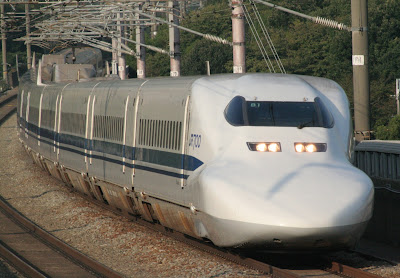

Mawhinney also pushes hard for movement on the other "classic" rail connections into Heathrow -- Airtrack, from Waterloo and with connections from Woking and Reading (which will transform rail access to Heathrow from the south-east and south coast), and links via Langley to the western part of the WCML, opening up the Thames Valley for easy access (at the moment passengers have to whizz past Heathrow to Paddington, and change there to the HEX where they then retrace the 10 miles of railway line to whizz back to the airport).


There's currently no connection from the railway lines to the south of Heathrow. Airtrack will provide a through connection:


Mawhinney urges the Secretary of State to commission a new study into this issue.

Overall, Mawhinney rubbishes the idea of routing the high speed railway via Heathrow (the cost of "£2-4bn" is "not likely to represent value for money for either the taxpayer or the train operator"). In any event, he goes on, "such a route is not supported by the evidence of benefits": if I were the Tory Opposition Transport Spokesperson who'd pushed hard for this, I'd be looking pretty sheepish by now.


He does add that by the time the high speed network has reached Scotland there might be an argument to have some trains serving Heathrow, so he proposes that the works to build HS2 should make allowances for such a connection at some point in the future. The far, far distant future.

Mawhinney has further suggestions, including that BAA, the airport operator, undertakes some major rebuilding works to co-locate all rail and underground stations and make interchange easier. He also suggests a single terminus under the central terminal area (what used to be Terminals 1, 2 and 3), which is a bit of a snub to BA way out in the sticks at T5 -- he pointedly says "in the UK we do not have a national airline".


Mawhinney suggests postponing any decision about having a more central London terminus way into the future, and argues that HS2 should not be held up while that debate rages. Interestingly, he suggests exploring whether "such a terminus could be located so that it would serve HS1, HS2, and perhaps the Heathrow Express and Crossrail". I can't actually think of a single possible configuration that could do all of that, short of extending Crossrail somehow and excavating all the ground under King's Cross/St Pancras; or diverting HS1 to, er, Farringdon and hollowing out Crossrail to take HS gauge trains, rejoining HS1 at Stratford-ish...? No, I can't even begin to imagine the cost of that.


Mawhinney pushes hard for the Secretary of State to look, again, at whether regional trains should run to the continental mainland (eg, Manchester-Paris), asking that "further work on this issue be authorised urgently". At this point he abandons rational economics and states that:
Only once in a generation, or less frequently, do we as a nation think strategically about national transportation. With the concept of high speed rail we are at such a moment. I believe we should grasp the opportunity with maximum, though realistic, vision.

In that spirit it seems sensible to me to link Heathrow into a high speed rail network which might extend from Scotland to Paris. Clearly, it is both right and important to develop confidence in the business case. This does not need to be overwhelmingly positive, but it does need to be reasonable enough to enable the Secretary of State to take a major decision in the national interest. It makes sense if possible to create a seamless link between HS1 and HS2, and I believe such a decision would be popular. We should aim to deprive our grandchildren of the opportunity to criticise our lack of vision or determination – as long as this can be achieved in a way that taxpayers deem reasonable.


Blimey. I wasn't expecting such romance from him of all people.